
The Foundation—Why Whole Foods and Fiber Rule
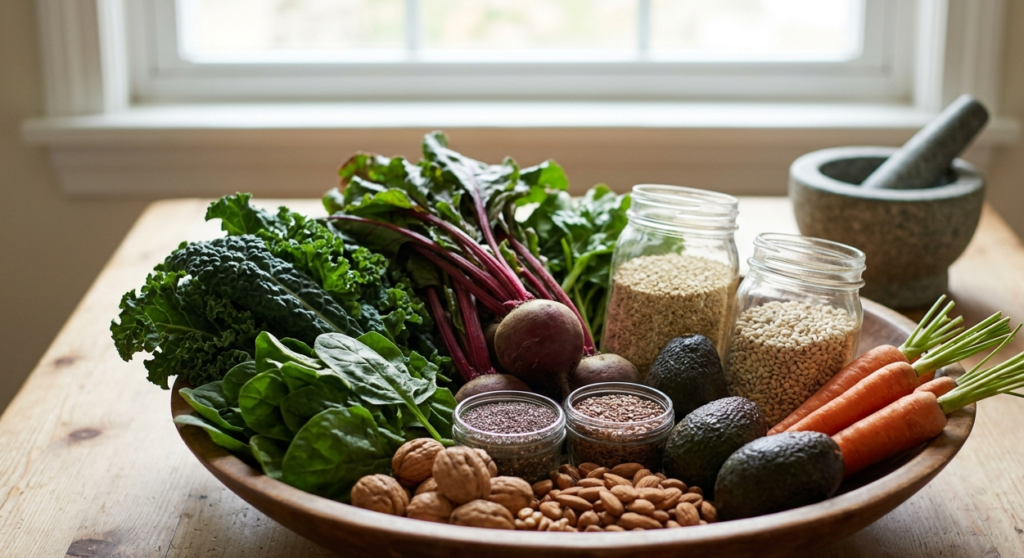
In an era defined by convenience, the modern diet is often dominated by ultra-processed foods: neatly packaged items engineered for long shelf life and instant gratification. While these products save time, they often come at a significant cost to our health. The antidote—and the cornerstone of any truly healthy eating plan—is a return to whole, unprocessed foods. These are foods in their natural state, or very close to it, and they provide a complex nutritional package that supplements and fortified processed foods simply cannot replicate.
What Defines a Whole Food?
A whole food is precisely what it sounds like: a food that remains intact, with all its original components. Think of an apple versus applesauce, or a whole oat groat versus a refined “instant oatmeal” packet. Examples include fruits, vegetables, legumes (beans, lentils, peas), nuts, seeds, whole grains (like quinoa, brown rice, and barley), and high-quality animal proteins like fresh fish or eggs.
The magic of whole foods lies not in a single “superfood” compound, but in the synergy of their parts. An orange doesn’t just provide Vitamin C; it delivers it alongside fiber, potassium, folate, and hundreds of other bioactive compounds that work together to enhance absorption and support cellular health.
The Fiber Connection: Nature’s Regulator
Perhaps the single most critical component lost during food processing is fiber. Fiber is a type of carbohydrate that humans cannot digest. While this might sound useless, fiber is vital precisely because it passes through the system relatively intact.
Fiber serves several critical functions:
- Digestive Health: It adds bulk to stool, promoting regular bowel movements and preventing constipation.
- Blood Sugar Control: Soluble fiber (found in oats and beans) slows the absorption of sugar, preventing the rapid glucose spikes that tax the pancreas and contribute to insulin resistance. This provides stable energy throughout the day.
- Heart Health: Fiber helps bind to cholesterol in the digestive tract and remove it before it enters the bloodstream, lowering the risk of heart disease.
- The Gut Microbiome: Perhaps most excitingly, fiber acts as a prebiotic. It is the primary food source for the beneficial bacteria living in your gut. A healthy, diverse microbiome is now linked to strong immunity, improved mood, and better metabolic health.
Simple Shifts Toward Whole Foods
Shifting toward whole foods doesn’t require a radical, overnight dietary overhaul. Small, consistent changes have the biggest impact.
Start by replacing refined grains (like white bread or pasta) with whole-grain alternatives. Aim to make fruits and vegetables the stars of your plate at every meal. Instead of reaching for a snack bar, grab a handful of almonds or a piece of fruit. By consistently prioritizing these intact, fiber-rich foods, you create a metabolic environment where health and vitality can thrive.
Dinner Is Wrecking Your Weight Loss. Here’s How to Fix It in 30 Minutes.
Get 35 fast, balanced weight-loss dinners (all ready in 30 minutes or less) — plus a 7-day dinner plan, grocery list, and cooking time chart — so you can protect your evenings without extreme dieting or willpower.

Enter your email and I’ll send you the free dinner guide instantly.

